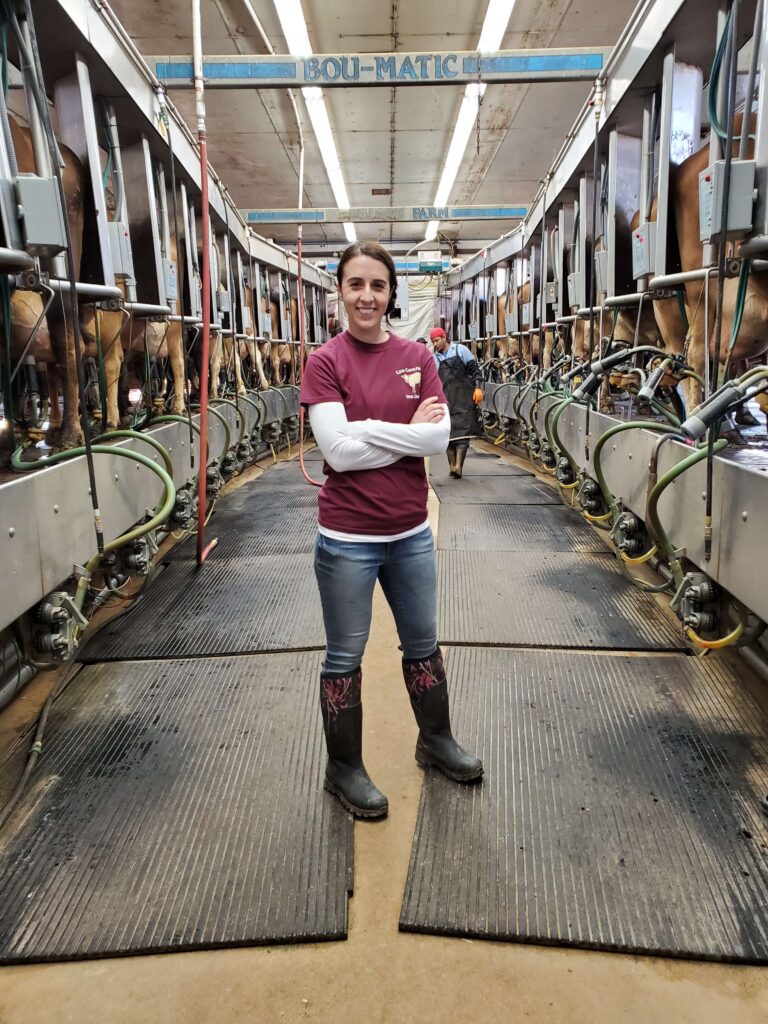
The phone call came from the milk plant at 3 p.m. on a Tuesday with the words no dairy farmer wants to hear:
“Kate, your load of milk tested positive.”
I let it sink in, then started questioning everything.
How could that be?
I had never had a “hot tank,” as we call it, because we were always careful about the process. Almost immediately, another question followed: How will I financially recover from this?
A positive milk test is serious. Dairy farmers can face fines, lost milk income, and potentially much bigger consequences for their Grade A license.
Here’s the context.
Just like people, cows get sick. Sometimes they need antibiotics. When that happens, their milk cannot be sold for human consumption, so it has to be discarded.
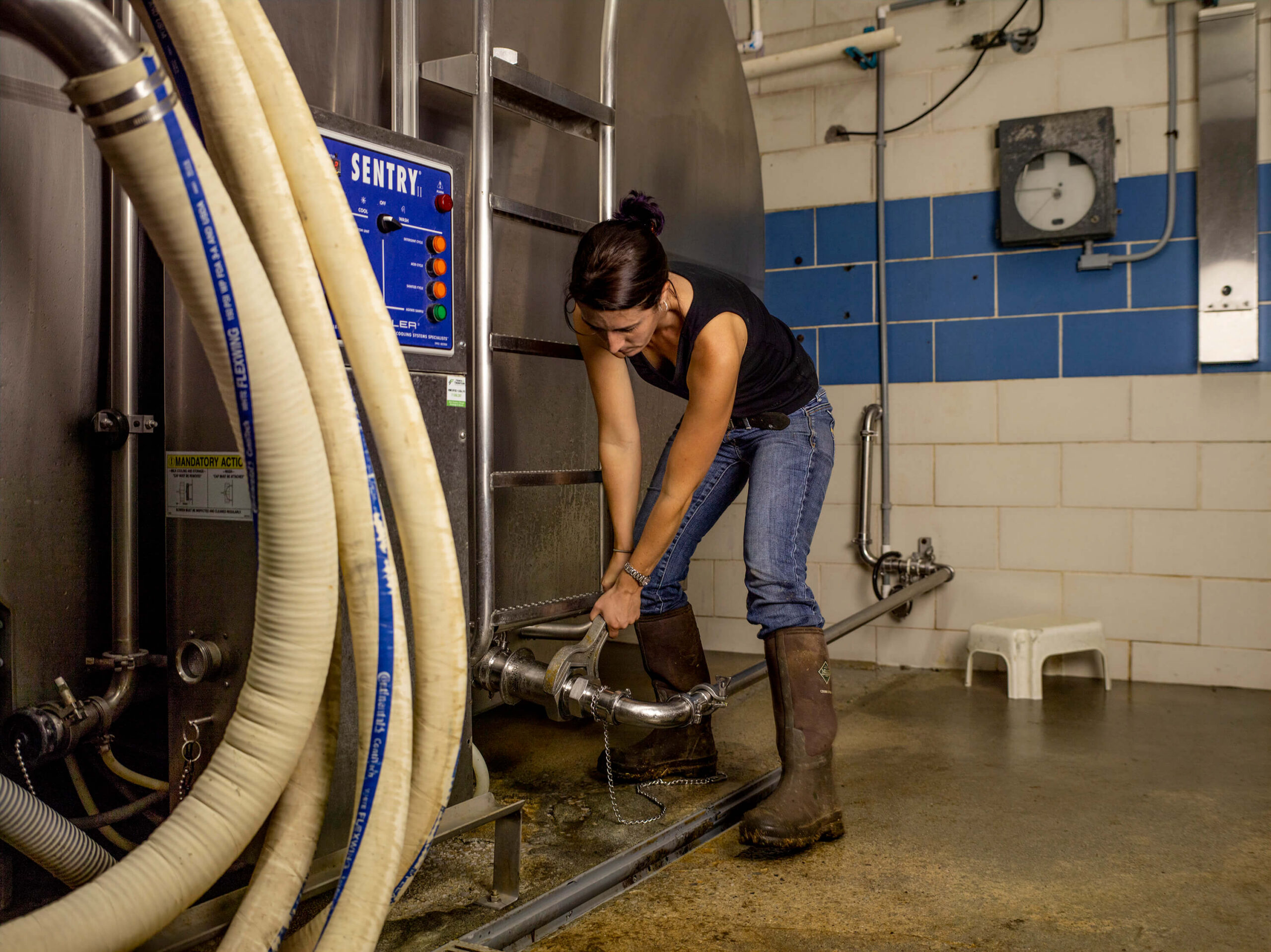
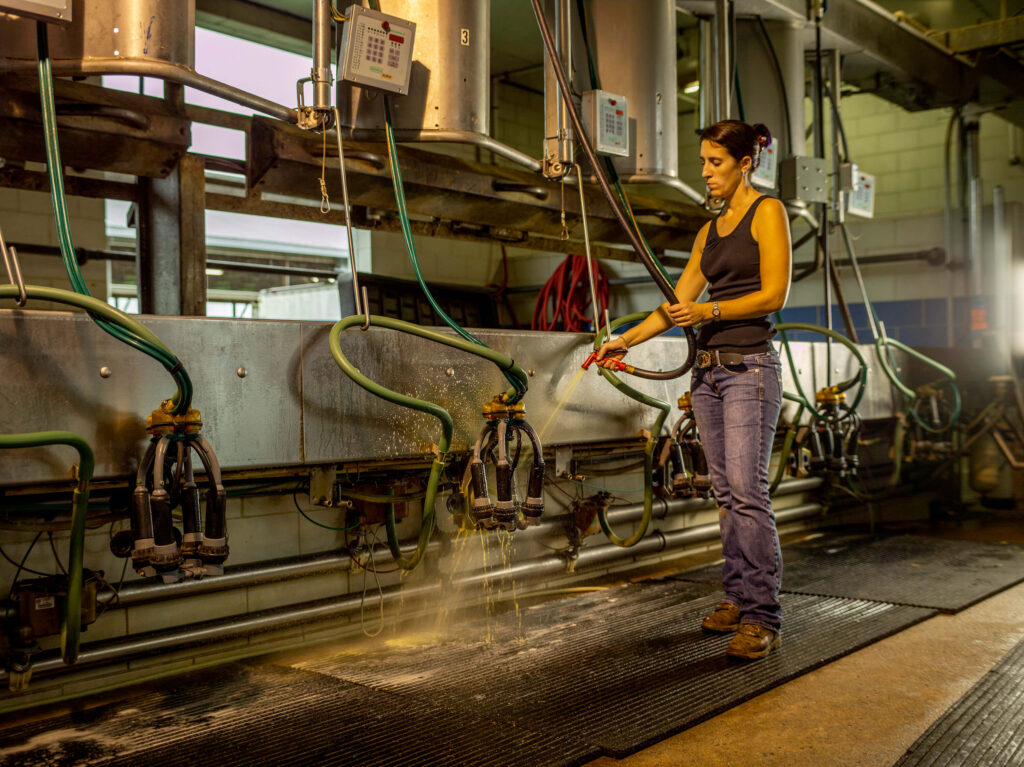
On our farm, we kept those cows in a separate “hospital” group and always milked them last. Milk from healthy cows traveled through a pipe into the bulk tank. When it was time to milk the hospital cows, that pipe was supposed to be disconnected and positioned over a floor drain so their milk never entered the tank.
It was a simple protocol.
Or at least I thought it was.
I mentally ran through the three sick cows we had at the time and checked the hospital pen. None of them had gotten mixed in with the rest of the herd.
So what the heck happened?
I gathered the crew who had milked the previous two shifts and asked, in my–at the time–very broken Spanish, whether they’d followed the pipe-disconnection protocol.
I got a few nods.
Mostly, I got blank stares.
That was when I knew.
They didn’t understand.
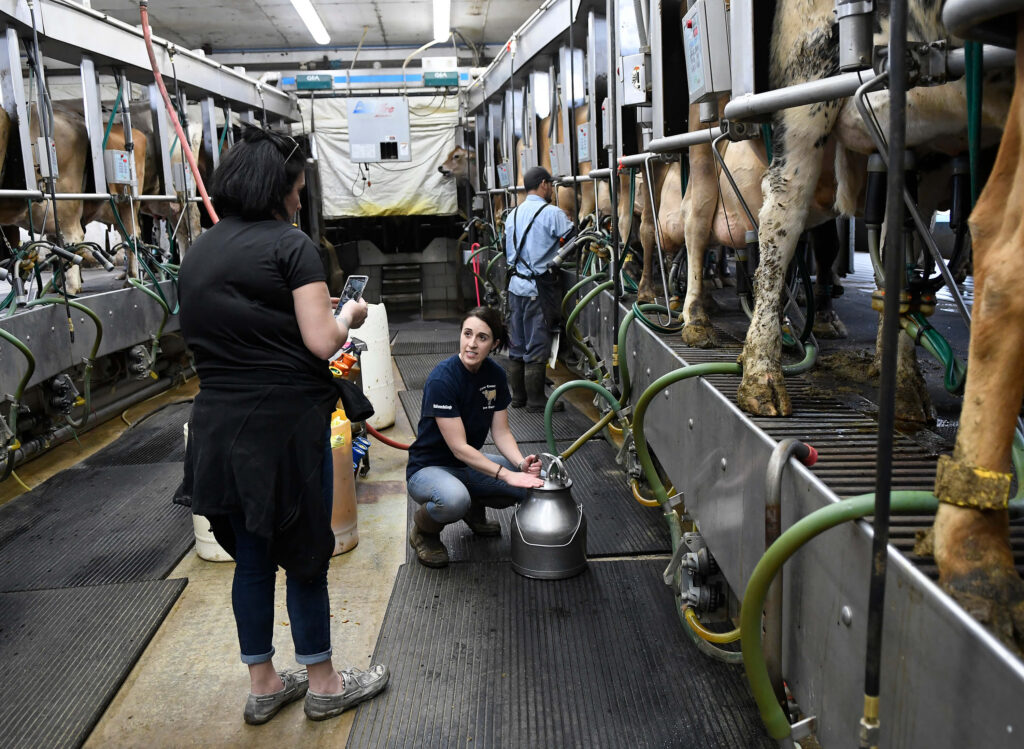
So I stopped everything and modeled the process again, step by step, showing exactly what should happen when the hospital cows entered the parlor.
Afterward, Fernando quietly pulled me aside.
“I sorry. I no understand first.”
He’d been hired only a week earlier, and I had trained him.
Or so I thought.
To this day, I don’t know exactly what went wrong. Maybe something got lost in translation. Maybe my explanation was too rushed. Maybe my farm version of charades made perfect sense to me and very little sense to him.
What I do know is that I had explained the procedure before the hospital cows came in, then moved on to another chore, assuming the training had landed.
It hadn’t.
I was frustrated. Fernando felt awful. Morale was low.
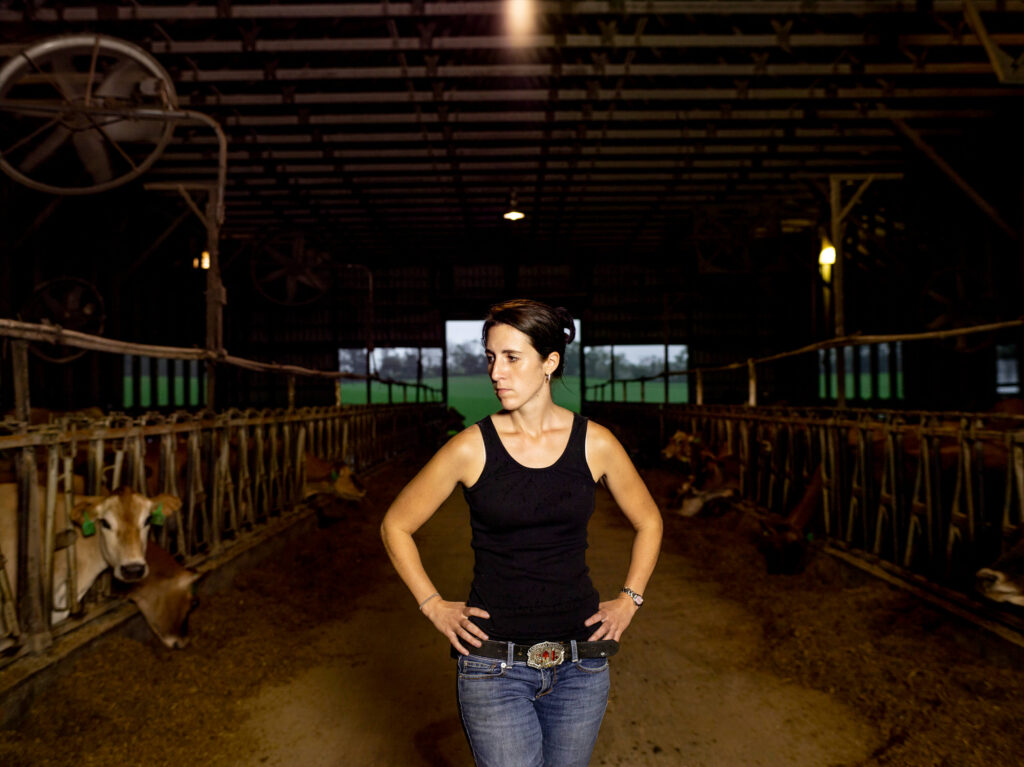
The hardest part was that I knew I needed to explain how serious the incident was, but I didn’t yet have the language skills to do it well.
At the time, Google Translate didn’t help much with the farm-specific language I needed (still doesn’t although there have been minor improvements).
That experience changed the way I thought about training.
For a long time, I assumed that if I explained something clearly enough, demonstrated it once, and got a nod in return, the job was done.
It wasn’t.
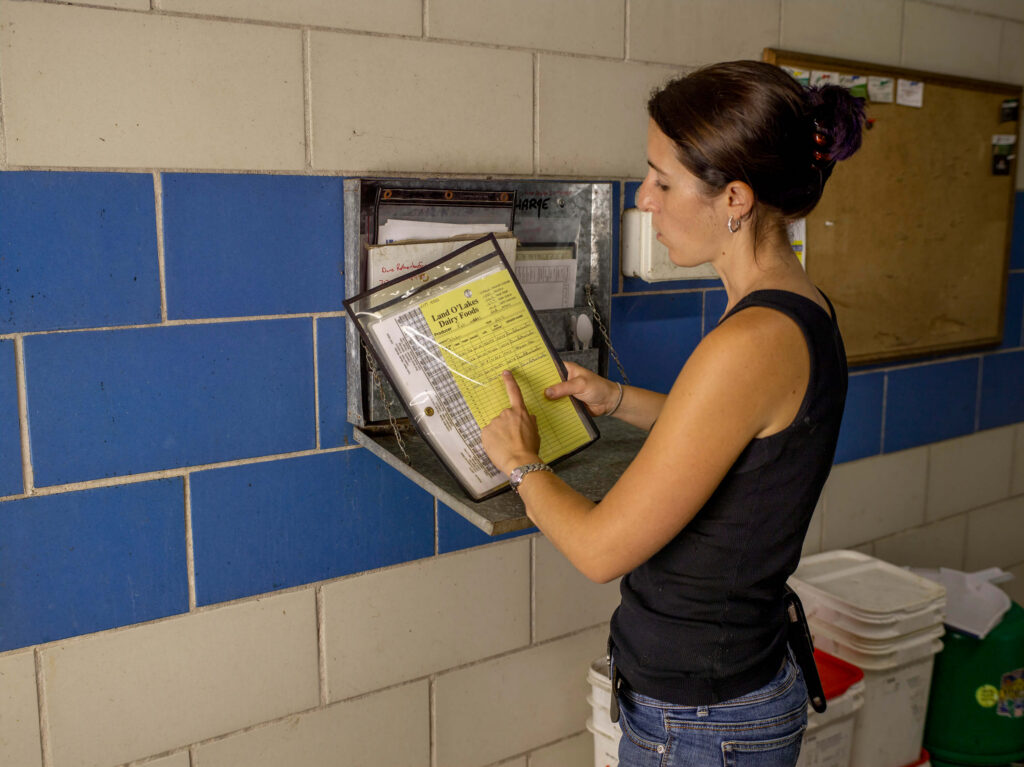
Communication is not complete when the words leave your mouth. It is complete when the other person understands what you mean, why it matters, and what they need to do next.
That becomes even more important on farms and in agricultural businesses, where teams may work across different languages, literacy levels, cultures, and experience levels.
Sometimes the problem is vocabulary.
Sometimes it is confidence.
Sometimes an employee says “yes” because they do not want to admit they are confused.
Sometimes the instruction is technically translated correctly, but the meaning still does not land.
And sometimes the employer assumes understanding because no one asks a question.
Those moments can cost a business time, money, trust, safety, and productivity.
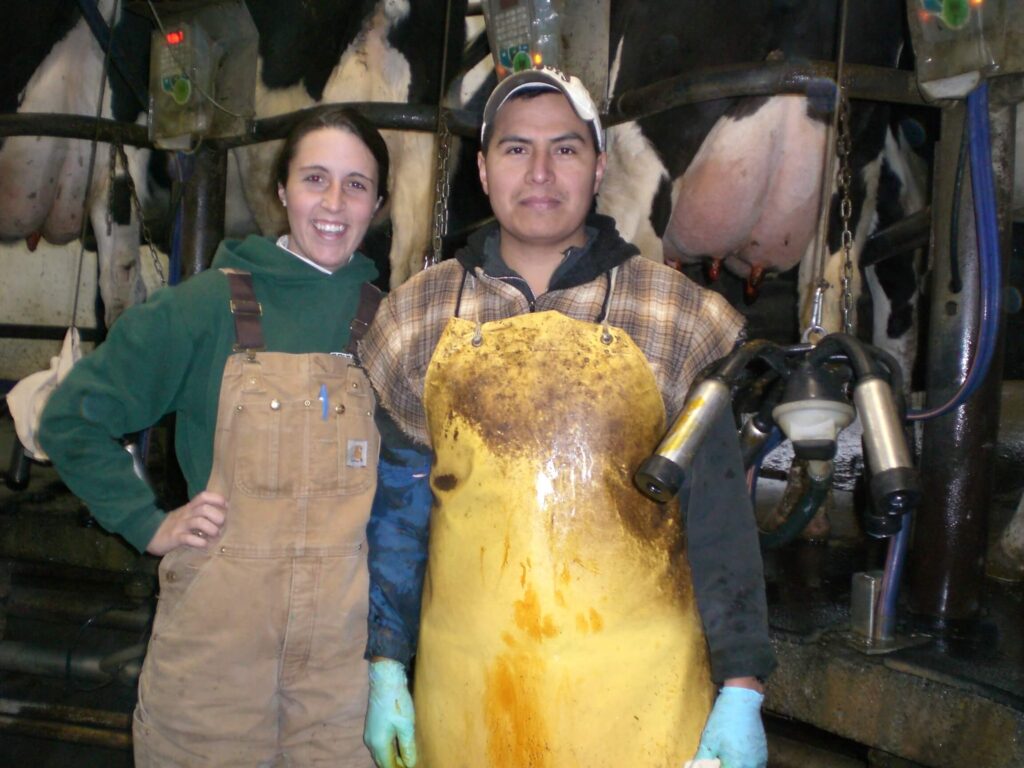
They can also make good employees feel like they failed when, in reality, the training failed them.
That is one of the biggest lessons I carried from the farm into AgvoKate.
I do not believe the answer is perfect Spanish. I do not believe the answer is expecting employees to simply “figure it out,” either.
The answer is learning to meet in the middle.
That means slowing down. Demonstrating. Asking better questions. Checking for understanding. Giving people more than one way to learn. And creating a workplace where saying, “I don’t understand yet,” is safer than pretending you do.
Because “yes” does not always mean understood.
And sometimes the difference between the two is a hot tank of milk.